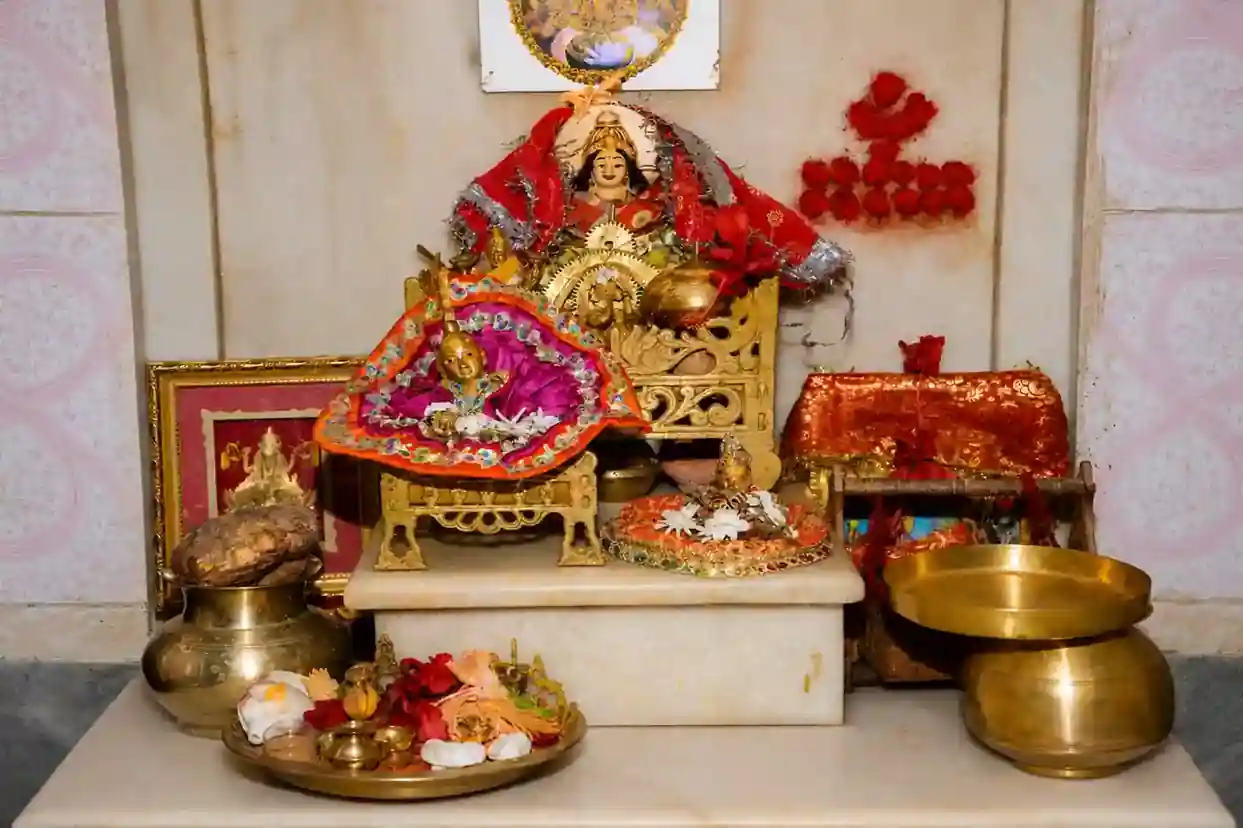
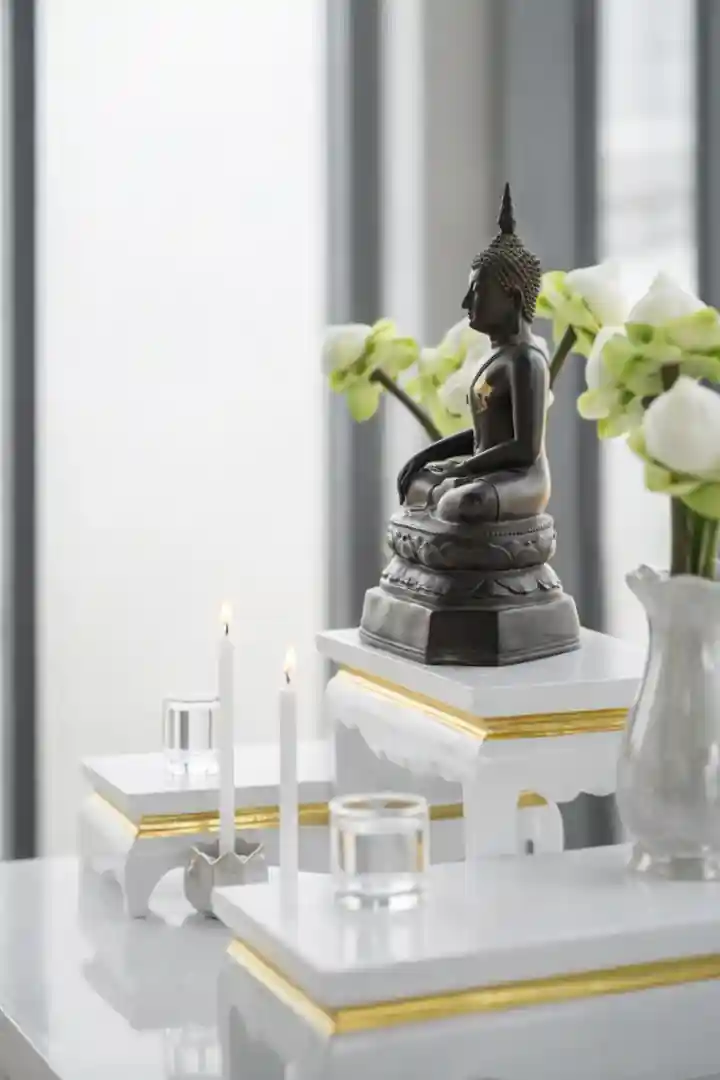



If you’ve apartment-hunted in Mumbai, you already know the drill. The broker says “spacious 2BHK,” you walk in, and suddenly your sofa, dining table, and work desk are all negotiating territory. And still, almost every Indian family says the same thing during interior planning, “We need a mandir.” Not a decorative shelf that is an afterthought, but a proper space that feels respectful and reverent.
This is where pooja room designs in walls come into the picture. They’re not a compromise, but rather a smart adaptation to how urban homes actually function. Instead of demanding a separate room, they use vertical real estate, which is the only thing still available in most city apartments.
When people think about interior designs for mandirs, they often think small. However, size isn’t the true objective anyway; thoughtfulness is. Below are ideas that genuinely suit Mumbai’s compact flats and Bangalore’s open layout apartments.
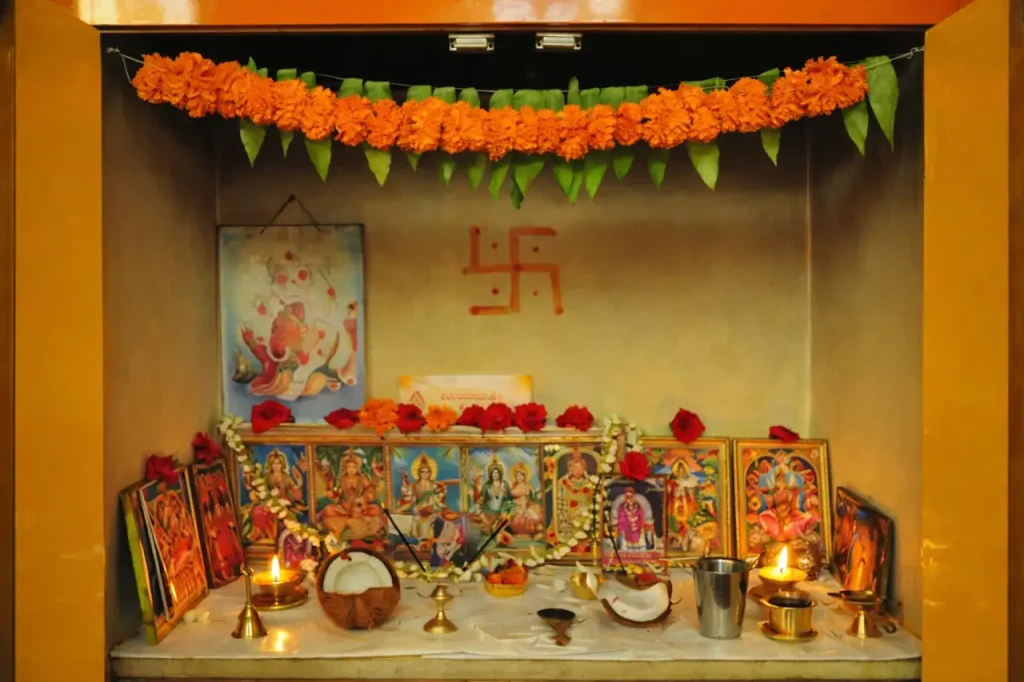
A recessed niche instantly changes the energy of a space. Instead of attaching a unit to a wall, the mandir is carved into it. This approach works especially well in compact urban apartments where every inch matters. A carefully proportioned pooja room interior within a niche feels grounded.
Modern living rooms often serve multiple purposes, from work calls to family gatherings. A mandir that is always open may feel visually distracting during everyday activities. Sliding panels make pooja room designs in walls ideal for homes where the space must shift moods quickly.
In most urban apartments, such as those found in Mumbai, horizontal width is a limited commodity. However, vertical space often remains unused. Vertical composition is one of the smartest strategies for pooja room designs in walls. Vertical design is one of the go-to solutions for experienced Mumbai interior designers, as it draws the eyes upwards and subtly makes the living room feel taller.
Every home has prayer essentials, such as agarbattis, diyas, camphor, and books, that often end up scattered across different areas. When storage is built into wall pooja room designs, clutter stops creeping into the rest of the house.
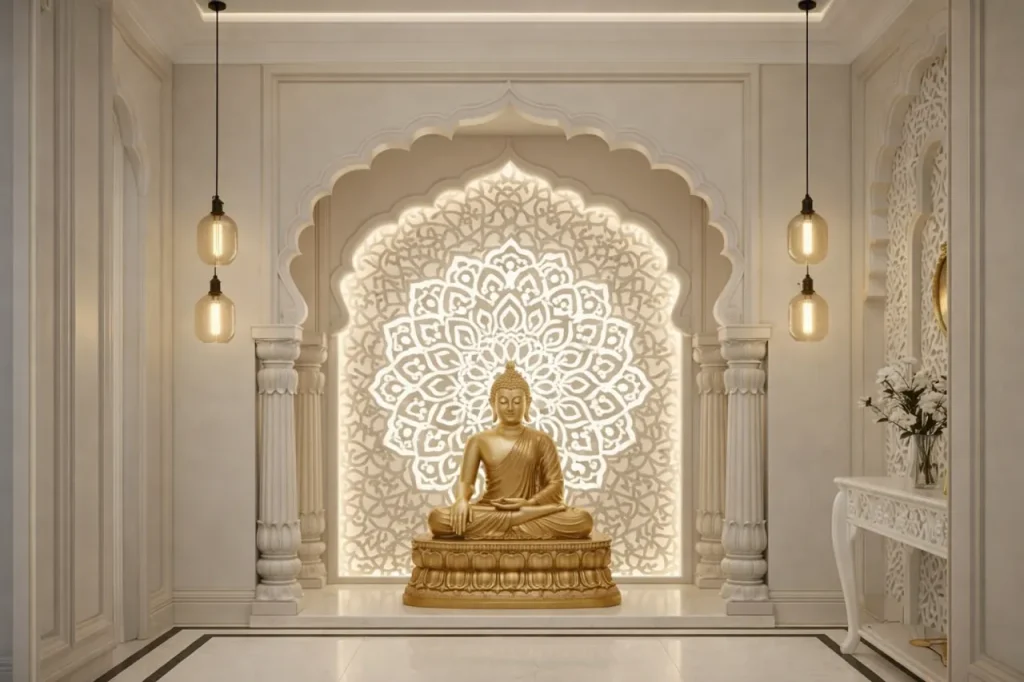
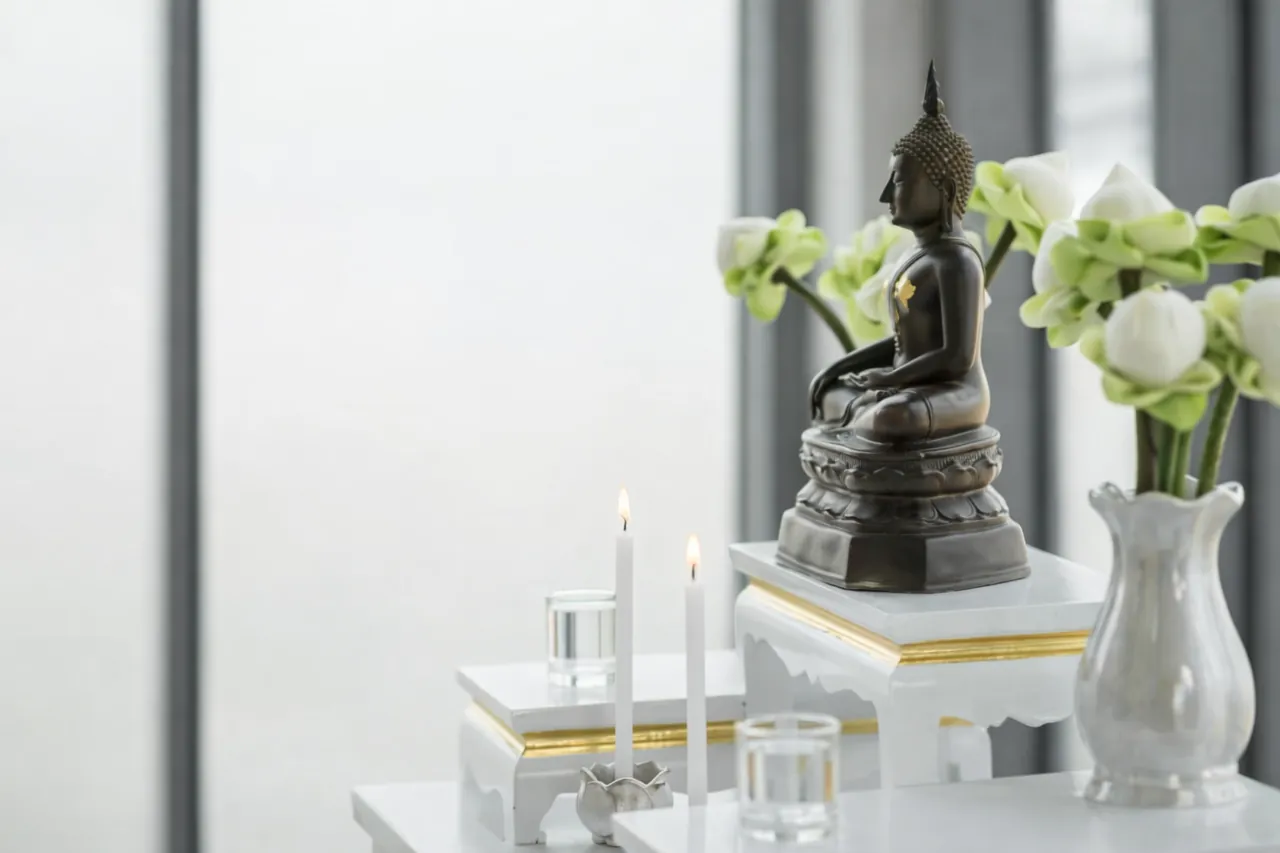
Good lighting transforms pooja room designs in walls from functional to deeply calming and reverent. On the other hand, poor lighting can make the space feel dull or overly harsh.
For many families, the direction of the mandir is deeply connected to Vastu principles. A balanced pooja room interior respects both spatial logic and spiritual alignment.
Urban apartments have unique challenges, such as the constant construction dust in Bangalore. Bangalore-based interior designers prefer to recommend materials that age better, especially in areas where dust accumulation is a regular problem. The right material choices directly affect how long your pooja room designs in walls look fresh.
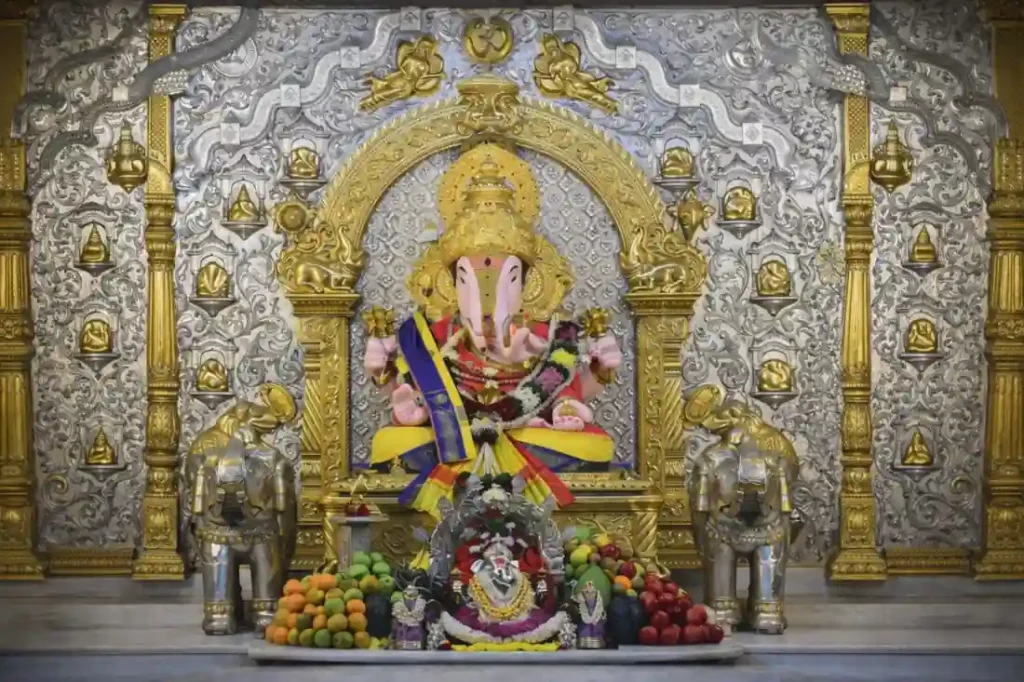
During festivals like Ganesh Chaturthi or Navratri, the mandir often becomes the focal point of the home. Implementing subtle pooja room decoration tips allows you to celebrate with your family without any unneeded chaos.
A wall-mounted mandir may look simple, but execution determines everything. Aspects like electrical planning, structural checks, detailing, and storage ergonomics all need to be kept in mind while designing a mandir.
Bonito Designs approaches this issue with its LifeDesign philosophy. The focus is not just on aesthetics, but on how families in Bangalore and Mumbai genuinely live. Morning rush hours, compact layouts, society regulations, and climate conditions are kept in mind. With in-house execution teams and ISO-certified quality processes, Bonito manages the journey end-to-end.
From design conceptualisation to build, quality control, and final handover, each interior is crafted with precision. Their familiarity with local apartment typologies ensures that pooja room designs in walls are customised to fit the exact layout of your home.
Urban life in Mumbai and Bangalore is fast, and hence, each apartment needs to be efficient. But space constraints cannot hinder your devotion, especially if you have the right interior design partners to help you out. With thoughtful materials, intelligent storage, proper lighting, and careful placement, pooja room designs in walls allow sacred spaces to exist comfortably within compact homes. Book a consultation with Bonito Designs to create a wall-carved mandir that is just as meaningful as a standalone prayer room, without demanding extra square footage.